

The “static stability” power of Tianhe Environmental Protection’s heavy-duty plate feeder.
Release time:
2025-12-18
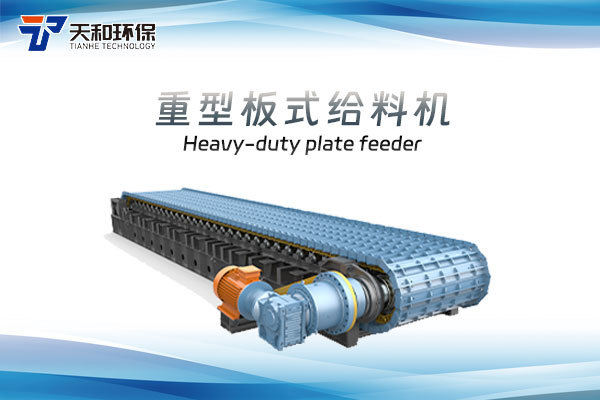
The Tianhe Environmental Protection medium-sized plate feeder features thickened alloy chain plates and reinforced roller chains, enabling it to smoothly drag even raw ore over 1 meter thick or demolition waste with high clay content without slipping or getting jammed. Its trough structure has been optimized using computational fluid dynamics to minimize dead zones where materials tend to accumulate. Combined with a low-angle design, this feeder effectively addresses the challenge of clay-like materials adhering to the trough walls.
Behind the roaring operation of the crushing production line, what truly determines the upper limit of efficiency is often not the loudest piece of equipment, but rather the very first link that silently bears the brunt of the load.
When dealing with materials that are complex in composition—such as construction waste, oil shale, clay, electrolytes, and bauxite—and that feature high moisture content and strong stickiness, many companies have found that the problem doesn't lie with the crusher itself, but rather with the difficulty of feeding the material into the crusher or maintaining a stable feed rate. In such cases, a reliably performing... Heavy-duty plate feeder Thus, it becomes the key pivot for streamlining the entire process. Tianhe Environmental Protection deeply understands this principle; its heavy-duty plate feeder, with its steady and reliable demeanor, injects controllable certainty right from the source into the entire system.

Unlike vibrating feeders, which rely on high-frequency oscillations, heavy-duty plate feeders use a low-speed, high-torque chain-plate conveying method, making them particularly well-suited for the continuous handling of large-sized, high-moisture, and easily adhesive materials.
The Tianhe Environmental Protection medium-sized plate feeder features thickened alloy chain plates and reinforced roller chains, enabling it to smoothly drag even raw ore over 1 meter thick or demolition waste with high silt content without slipping or getting jammed. Its trough structure has been optimized using computational fluid dynamics to minimize dead zones where materials tend to accumulate. Combined with a low-angle design, it effectively addresses the challenge of clay-like materials adhering to the trough walls.

More importantly, it provides a “predictable” input rhythm for downstream crushing equipment. By using variable-frequency speed control, the feeding rate can be dynamically matched to the processing capacity of either a double-tooth roll crusher or a hammer crusher, thereby avoiding downtime caused by momentary overloads and preventing energy waste from idle running. This capability of “uniform energy supply” is especially critical in mobile crushing stations or integrated screening-and-crushing systems—it enables the entire production line to shift from “passive response” to “proactive coordination.”
Tianhe Environmental Protection also places great emphasis on maintaining user-friendliness: its modular chain-link design allows for localized replacement without the need to disassemble the entire machine; the bearing housing is physically isolated from the material passage and, combined with multiple sealing mechanisms, significantly extends the service life of core components. These thoughtful details ensure that the equipment can operate reliably over the long term—even in remote mining areas or urban demolition sites.
In an era that relentlessly pursues “speed” and “intelligence,” Tianhe Environmental Protection has chosen to return to the fundamentals—building a feeding device that’s “unobtrusive yet indispensable” through solid construction, restrained design, and a profound understanding of operational conditions. After all, true efficiency begins with stability—and stability, in turn, starts with the confident, unhurried movement of the very first chain plate.
Recommend News
Address: South of Wa Fangzhuang Village, High-tech Zone, Tangshan City, Hebei Province
E-mail:tianhe@techheir.com
Website:www.techheir.com

WeChat Public Number
COPYRIGHT Tangshan Tianhe Environmental Protection Technology Co., Ltd. Powered by 300.cn | TAG  冀公网安备13024002000470号